Introduction
In the fast-evolving digital landscape of 2025, digital transformation is no longer a buzzword — it’s a fundamental business imperative. Organizations across industries are reinventing their operations, leveraging advanced technologies to enhance efficiency, agility, and customer experiences.
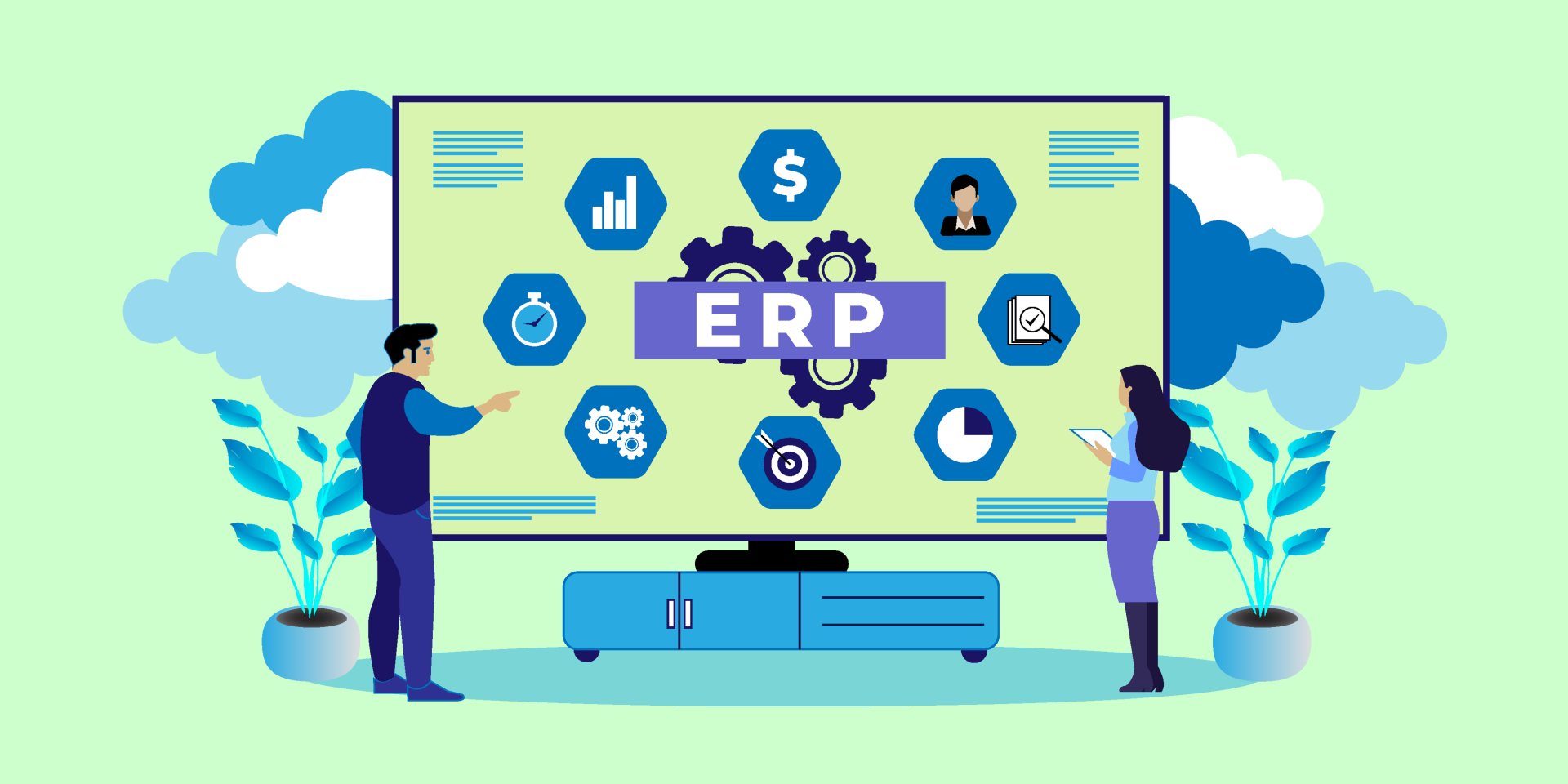
At the heart of this transformation lies Enterprise Resource Planning (ERP) software — a central platform that integrates and automates key business functions. Modern ERP systems are now far more than accounting or inventory tools; they serve as the digital backbone of enterprise operations, connecting people, processes, and data across the organization.
1. Understanding Digital Transformation in 2025
Digital transformation refers to the strategic integration of digital technologies into all areas of a business to improve operations and deliver more value to customers.
By 2025, digital transformation focuses on:
Data-driven decision-making through analytics and AI.
Automation of repetitive tasks to boost productivity.
Cloud-based collaboration and remote accessibility.
Customer-centric innovation driven by real-time insights.
However, achieving these goals requires a unified system that ensures consistency, accuracy, and visibility across all business processes — and that’s where ERP comes in.
2. How ERP Enables Digital Transformation
a) Unified Data Management
ERP systems integrate data from finance, sales, supply chain, HR, and customer service into a single platform. This eliminates data silos and enables a single source of truth, ensuring every department works with accurate, real-time information.
b) Process Automation and Efficiency
Through AI-driven workflows and robotic process automation (RPA), modern ERP software automates repetitive tasks — such as invoicing, procurement, and payroll — reducing errors and freeing employees to focus on high-value work.
c) Real-Time Analytics and Insights
ERP systems in 2025 come with powerful analytics and machine learning tools. These capabilities allow businesses to predict trends, optimize operations, and respond proactively to market changes.
d) Cloud Scalability and Flexibility
Cloud ERP solutions provide flexibility, faster updates, and global accessibility. Companies can scale resources up or down based on demand while maintaining security and performance.
e) Improved Customer Experience
By integrating CRM and ERP data, organizations can deliver personalized customer experiences — from faster order processing to predictive customer support.
f) Enhanced Collaboration
ERP platforms facilitate collaboration across teams and geographies by providing shared access to data, documents, and reports, enabling remote and hybrid work models.
3. Key Technologies Driving ERP Transformation in 2025
1. Artificial Intelligence (AI) and Machine Learning (ML)
AI-powered ERP systems provide predictive analytics, automated insights, and intelligent recommendations for decision-makers.
2. Internet of Things (IoT)
IoT-enabled ERP connects real-time data from sensors and devices, especially in manufacturing and logistics, improving asset tracking and maintenance.
3. Blockchain Integration
Blockchain enhances data security and transparency in supply chain management, financial transactions, and contracts.
4. Low-Code/No-Code Platforms
These tools empower business users to customize ERP workflows without heavy coding, accelerating innovation and reducing IT dependency.
5. Advanced Cybersecurity
Modern ERP systems employ AI-driven threat detection and zero-trust security models to safeguard business data in a connected world.
4. ERP as the Core of Enterprise Agility
Digital transformation demands agility — the ability to adapt quickly to market shifts. ERP provides this by:
Supporting modular architectures that allow incremental upgrades.
Integrating seamlessly with other enterprise systems (CRM, SCM, BI tools).
Offering real-time visibility into performance metrics for faster decision-making.
As a result, ERP acts as the central nervous system of the digital enterprise, coordinating every process and ensuring business continuity even amid disruption.
5. The Strategic Benefits of ERP-Driven Transformation
Operational Efficiency: Streamlined workflows reduce redundancies and improve productivity.
Enhanced Decision-Making: Unified data enables better forecasting and strategic planning.
Cost Reduction: Automation and process optimization lower operational expenses.
Regulatory Compliance: ERP simplifies compliance tracking through built-in reporting and audit tools.
Scalability: Cloud ERP grows with the organization, supporting expansion into new markets.
6. Challenges and Best Practices
Common Challenges
High implementation costs and change management resistance.
Data migration complexities.
Ensuring user adoption and training.
Best Practices
Align ERP strategy with business goals.
Engage leadership and end-users early.
Choose an ERP vendor with strong innovation and support capabilities.
Adopt a phased implementation approach to reduce risk and disruption.
7. Future Outlook: ERP and Beyond 2025
ERP systems will continue to evolve as AI, IoT, and advanced analytics reshape how businesses operate. The next generation of ERP will be even more autonomous, predictive, and adaptive — capable of making real-time business decisions with minimal human intervention.
In the era beyond 2025, ERP will serve as the foundation for intelligent enterprises — organizations that leverage data, automation, and collaboration to continuously innovate and deliver exceptional value.
Conclusion
In 2025, ERP is not just part of digital transformation — it is digital transformation. By integrating data, automating processes, and enabling intelligent decision-making, ERP platforms empower businesses to become more agile, efficient, and customer-focused.
Organizations that view ERP as a strategic enabler — rather than a mere software system — will lead the digital economy of the future. With the right ERP strategy, businesses can transform challenges into opportunities and pave the way for sustained success in the digital age.